Do elephants plant trees?
Elephants do not plant trees on purpose, but they do move seeds around on a very large scale. They eat fruit, swallow the seeds, and later drop them in dung, often a long way from the tree they came from. A major scientific review calls elephants "forest gardeners" for this reason.
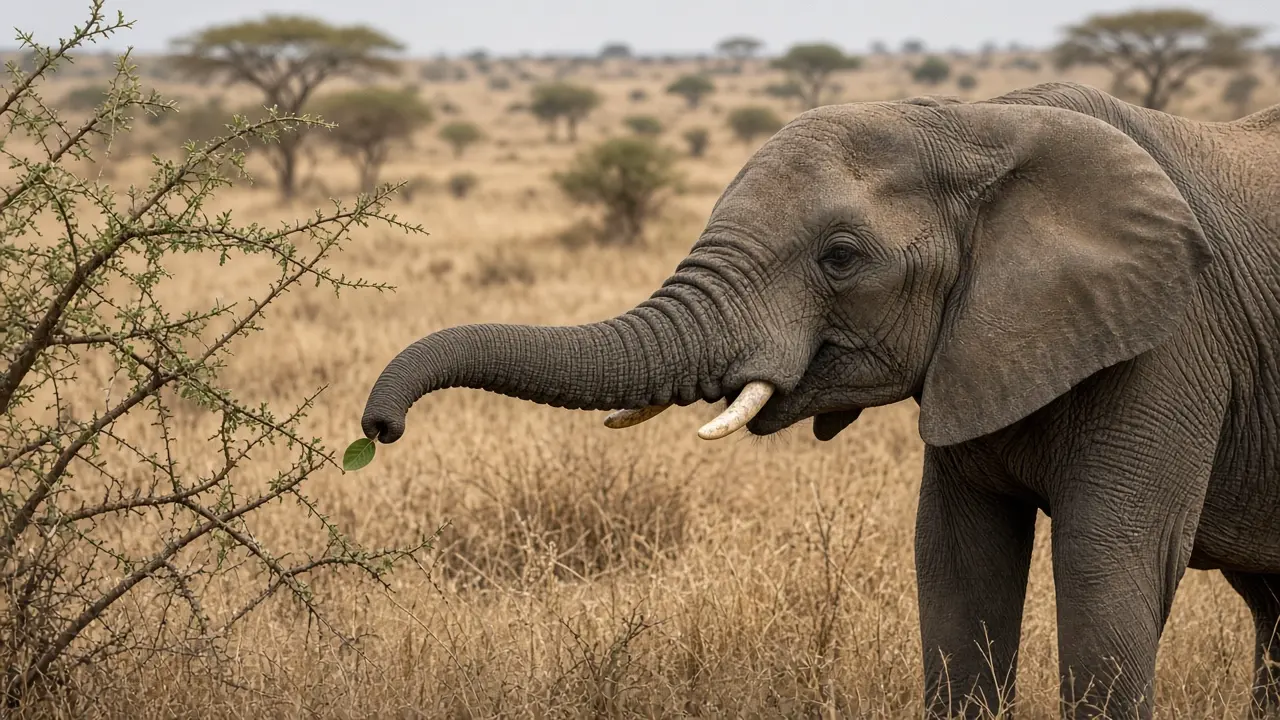
The review, by Ahimsa Campos-Arceiz and Steve Blake, was published in 2011 in the journal Acta Oecologica. Everything below comes from that paper, which collects the evidence from many field studies in Africa and Asia.
How do elephants spread seeds?
The process is called endozoochory, which simply means seeds are carried inside an animal. An elephant eats a fruit, the seeds pass through its gut, and they are deposited with its dung. The review notes that an elephant's large mouth and gape mean its feeding is not limited by the size of fruits or seeds, so elephants can swallow fruit that smaller animals cannot handle.
A wild adult Asian elephant may spend up to 18 hours a day feeding and eat some 150 kg of food, according to the review. With that much eating, a lot of plant material, including seeds, passes through the animal.
How far do elephants carry seeds?
Distance is where elephants stand out. The review reports that tracking studies of six Asian elephants, three in southeastern Sri Lanka and three in central Myanmar, found mean seed dispersal distances of 1 to 2 km and maximum distances of 6 km.
In the moist forests of Ndoki in the Congo, a study using four collared African forest elephants estimated that 88 percent of dispersed seeds were moved more than 1 km from the parent tree, and that 14 percent of large seeds were carried more than 10 km. The longest distance recorded was 57 km. The authors say these distances dwarf those of other animal seed dispersers in central African forests.
Which elephants are the best gardeners?
Not all elephants play the same role. According to the review, African forest elephants are the most fruit-eating of the three kinds of elephant, followed by Asian elephants and then African savannah elephants. Their importance as seed dispersers is described as variable and context-dependent, so it differs between habitats and continents.
African forest elephants may consume more seeds from more plant species than any other large vertebrate seed disperser. At Ndoki the review cites as many as 346 seeds per square kilometre per day being dispersed by forest elephants, and an average of 42.5 plant species dispersed per site across the studies it compiled. Forest elephants are also the exclusive or near-exclusive dispersers of a considerable number of plant species.
Does elephant dung help seeds grow?
Dung can give seeds some protection and nutrients, but the evidence is mixed. The review describes one study in which seeds of a savannah tree placed in elephant dung germinated at three times the rate of seeds planted straight into soil. Another study compared the seeds of 14 plants in dung and in forest soil and found no difference in overall germination, although seeds in dung generally germinated sooner.
The authors conclude that, although little data is available, deposition in dung seems to have a neutral or positive effect on germination. They also note that elephants tend to leave seeds in large clumps, which can create competition between seedlings.
Why does this matter for forests?
The signature of elephant dispersal can be seen in where certain trees grow, according to the review, which suggests that elephants help maintain tree diversity. Large numbers of forest elephants ranging over large areas may be essential for how forest ecosystems function.
The authors warn that losing elephants would have important negative consequences for some plant species and for whole ecological communities. They describe the conservation status of forest elephants as catastrophic in Asia and rapidly becoming so in Africa because of hunting and conflict with people. For the current status of each species, see our pages on the African forest elephant and Asian elephant.
What the research does not tell us
The review itself points out that research is still thin in some places, and that the role of elephants as seed dispersers varies. Figures such as dispersal distances come from small numbers of tracked animals, so they describe those study sites rather than every elephant everywhere. Other animals also disperse seeds, but the authors note that few can match elephants for distance, and the seeds they carry tend to be tiny or of different species.
Frequently asked questions
Do elephants really plant trees?
Not deliberately. They carry seeds in their guts and drop them in dung, which can start new plants far from the parent tree.
Which elephant disperses the most seeds?
According to the review, African forest elephants may disperse more seeds from more species than any other large vertebrate disperser.
How far can an elephant carry a seed?
In the studies reviewed, averages were 1 to 2 km for Asian elephants in Sri Lanka and Myanmar, and a maximum of 57 km was recorded for African forest elephants at Ndoki.
Does dung always help seeds germinate?
No. One study found a threefold boost, another found no overall difference, and the review summarises the effect as neutral or positive.
What happens if elephants disappear from a forest?
The review warns that some plant species and whole ecological communities would be affected, as other animals may not fill the same role.
Sources
Cite this page
APA
TuskWise. (2026, November 23). Do elephants plant trees? https://tuskwise.com/blog/do-elephants-plant-trees.html
MLA
“Do elephants plant trees?” TuskWise, 23 Nov. 2026, tuskwise.com/blog/do-elephants-plant-trees.html.
Chicago
TuskWise. “Do elephants plant trees?” TuskWise. Last modified November 23, 2026. https://tuskwise.com/blog/do-elephants-plant-trees.html.